

When you are researching a new physician, choosing a specialty clinic, or preparing for an upcoming hospital procedure, looking at patient satisfaction ratings has become an essential part of the modern healthcare journey. Navigating the U.S. healthcare system can feel overwhelming, and public feedback scores offer a direct window into what everyday patients actually experience behind closed doors. But what do these numbers and star ratings truly represent? Far beyond simple popularity scores, these metrics reflect a complex intersection of administrative efficiency, interpersonal communication, and overall medical service quality.
Understanding how these scores are calculated helps you separate genuine insights about clinical care from isolated administrative frustrations. Throughout this guide, you will learn how standardized federal surveys and commercial review platforms operate, which specific factors heavily influence a facility’s reputation, and how you can leverage this data to make more informed choices about your personal health management. For a broader perspective on assessing facility standards, you can explore this guide on healthcare facility transparency to learn how public data empowers patients.
1. Understanding Patient Satisfaction Ratings and Survey Frameworks
1.1 Definition and Evolution of Healthcare Consumer Metrics
1.1.1 The shift from treating illness to value-based patient-centered care
Modern healthcare has undergone a fundamental transformation, moving away from a traditional, volume-driven model toward value-based, patient-centered care. Historically, medical success was measured strictly by clinical recovery rates and procedural milestones. Today, the modern healthcare landscape prioritizes how patients experience their entire care journey. This evolution ensures that patient satisfaction ratings serve as vital indicators of a clinic’s operational success and dedication to holistic wellness.
1.1.2 Distinguishing between subjective patient satisfaction and objective clinical outcomes
Interpreting healthcare data requires understanding the distinct differences between subjective patient feedback and objective clinical outcomes. While clinical metrics measure physiological recovery, complication rates, and diagnostic accuracy, patient satisfaction ratings capture individual perceptions of comfort, communication, and empathy. High medical service quality naturally bridges these two domains, demonstrating that compassionate interpersonal interactions and rigorous clinical standards go hand in hand.
1.2 Standardized Federal Surveys and Commercial Review Platforms
1.2.1 Deep dive into HCAHPS and broader CAHPS ambulatory frameworks
Federal oversight relies on rigorous, standardized measurement tools to evaluate healthcare experiences objectively. The Hospital Consumer Assessment of Healthcare Providers and Systems (HCAHPS), alongside ambulatory CAHPS frameworks, provides a structured methodology for collecting feedback. These surveys allow federal agencies to benchmark facilities nationwide, ensuring that healthcare facility transparency remains a cornerstone of the modern U.S. health system.
1.2.2 Comparing standardized government reporting with third-party sites like Healthgrades and Google Reviews
Navigating public feedback means recognizing the differences between government-backed reporting and commercial review platforms. Standardized federal surveys use randomized sampling and risk-adjustment methodologies to eliminate bias, whereas third-party sites like Healthgrades and Google Reviews capture spontaneous, open-ended commentary. Evaluating both sources helps patients gain a balanced perspective on a provider’s overall reputation and clinical reliability.
1.3 Core Metrics Evaluated in Healthcare Feedback Surveys
1.3.1 Provider communication regarding diagnoses, treatments, and clear explanations
Effective dialogue between clinicians and patients heavily influences overall feedback scores. Survey questions frequently measure how well physicians explain complex medical conditions, outline therapeutic options, and listen to concerns. Strong physician bedside manner ratings often drive the highest satisfaction marks, as clear communication significantly reduces patient anxiety and improves treatment adherence.
1.3.2 Staff responsiveness, facility cleanliness, and environmental quietness
Beyond direct medical care, the physical environment and support staff play major roles in shaping patient sentiment. Metrics track how quickly nurses respond to call buttons, whether rooms remain clean, and if noise levels are managed effectively. These environmental factors contribute deeply to a patient’s sense of safety and comfort during their stay.
1.3.3 Medication communication, pain management protocols, and discharge instructions
Transition periods and therapeutic management require precise communication to prevent readmissions and complications. Surveys carefully evaluate whether staff explained potential medication side effects, managed discomfort proactively, and provided clear, written discharge instructions. For more insights on evaluating these standards, you can explore Patient Satisfaction Ratings: A Guide to Choosing Care.
1.3.4 Operational access factors including scheduling ease and appointment wait times
Administrative efficiency directly impacts a patient’s willingness to engage with a healthcare system. Feedback frameworks consistently measure operational hurdles, such as the simplicity of booking appointments, telephone hold times, and punctuality once arriving at the clinic. Streamlining these logistical touchpoints is essential for maintaining high patient approval and fostering long-term trust.
2. Practical Applications and Industry Impacts of Patient Satisfaction Ratings
2.1 Financial and Operational Implications for U.S. Healthcare Providers
In the modern U.S. healthcare landscape, patient satisfaction ratings are no longer viewed merely as courtesy metrics; they are powerful drivers of institutional revenue and operational strategy. Through programs like Medicare value-based purchasing, federal reimbursements are directly tied to how well hospitals and outpatient clinics perform on standardized surveys. If an institution consistently scores poorly, its Medicare payouts can face significant downward adjustments, creating an immediate financial incentive for leadership to prioritize the patient experience.
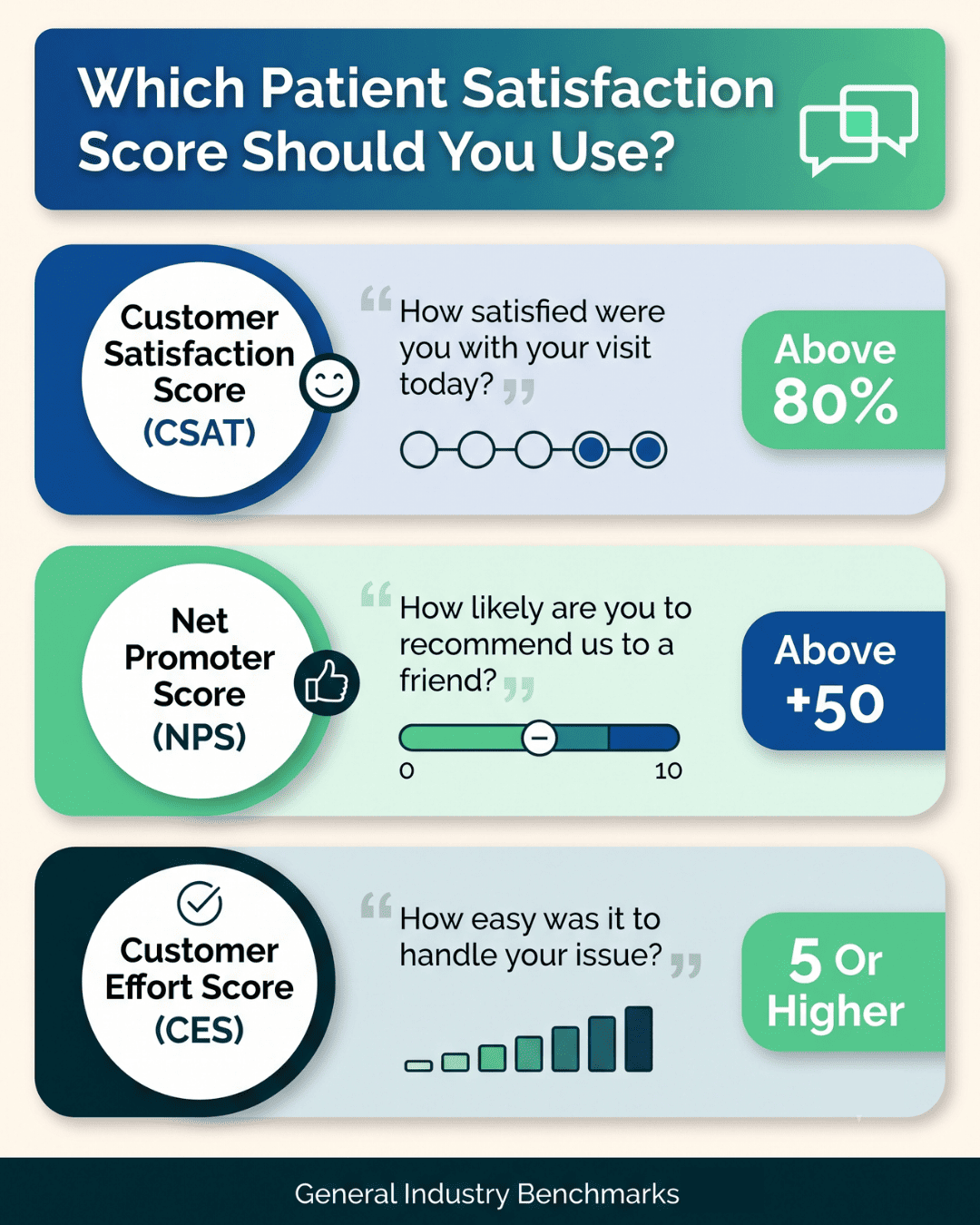
To track and improve these metrics, healthcare organizations rely heavily on structured internal data collection methods. Administrators deploy tools utilizing Likert scales—ranging from strongly agree to strongly disagree—alongside Net Promoter Scores to gauge whether patients would recommend the facility to friends or family. By aggregating this data, hospital executives can pinpoint exact operational bottlenecks, whether that means revising check-in workflows to reduce lobby congestion or retraining nursing staff on effective discharge communication.
2.2 How Consumers Can Evaluate and Utilize Healthcare Scores
For everyday healthcare consumers navigating the complex American medical system, public feedback platforms offer a helpful window into clinical operations. When researching new doctors, specialists, or hospital facilities, individuals should look beyond a single aggregate score and adopt a structured evaluation framework. Reading through multiple reviews helps distinguish between isolated statistical outliers—such as a frustrated patient reacting to a routine billing error—and systemic trends like chronic scheduling delays or recurring issues with physician bedside manner ratings.
At the same time, patients must recognize the inherent limitations embedded within public feedback. Response bias often skews ratings toward extremes, as individuals who experienced exceptionally positive or deeply frustrating visits are far more likely to leave reviews than those who received average, competent care. Keeping these subjective perceptions in perspective ensures that consumers use online scores as one component of a broader decision-making process rather than the sole indicator of medical service quality.
2.3 Frequently Asked Questions Regarding Healthcare Ratings
Navigating the nuances of healthcare feedback often prompts several common questions from patients and providers alike. A frequent point of confusion involves differentiating standardized federal data, such as Hospital Consumer Assessment of Healthcare Providers and Systems (HCAHPS) results, from open consumer review platforms like Google or Healthgrades. Federal surveys follow strict random sampling and methodological controls, whereas commercial sites rely on voluntary submissions that lack standardized verification.
Another major concern is whether low satisfaction scores directly correlate with poor clinical skill or substandard medical competency. Research consistently shows that patient satisfaction measures interpersonal communication, empathy, and environmental comfort rather than technical medical outcomes; a brilliant surgeon might occasionally receive low marks for perceived brusqueness. Furthermore, patients frequently wonder about data timelines and privacy. Federal ratings are typically updated on a rolling quarterly or annual basis, and patient anonymity protocols ensure that individual survey responses cannot be tied back to personal health records.
Navigating the world of modern healthcare requires more than just looking up a clinic’s physical address or checking insurance compatibility. By understanding how patient satisfaction ratings are calculated, consumers gain a powerful tool for evaluating overall medical service quality. Whether you are reviewing federal HCAHPS scores for a major hospital or reading localized feedback on a specialist, these metrics offer vital clues into how a facility operates.
Ultimately, combining objective clinical data with patient feedback allows you to make more informed choices about your care. While satisfaction surveys have inherent limitations—such as response biases and subjective perceptions—they remain invaluable for identifying trends in communication, facility cleanliness, and staff responsiveness. As healthcare continues to prioritize transparency and patient-centered delivery, utilizing these scores ensures you remain an active, empowered participant in your personal wellness journey.