

Finding the right healthcare provider can feel overwhelming, especially when you are sorting through a maze of online ratings, conflicting opinions, and glossy marketing materials. When your health and well-being are on the line, relying on superficial star averages is simply not enough. Making an informed choice requires knowing how to find and interpret trusted healthcare reviews while balancing everyday consumer feedback with rigorous clinical benchmarks.
Whether you are looking into patient satisfaction ratings or trying to understand a clinic’s actual track record, learning how to evaluate medical quality protects both your health and your peace of mind. In this guide, we will walk you through how to separate emotional venting from objective data, cross-reference physician credentials, and spot reliable medical information online so you can choose your care providers with absolute confidence.
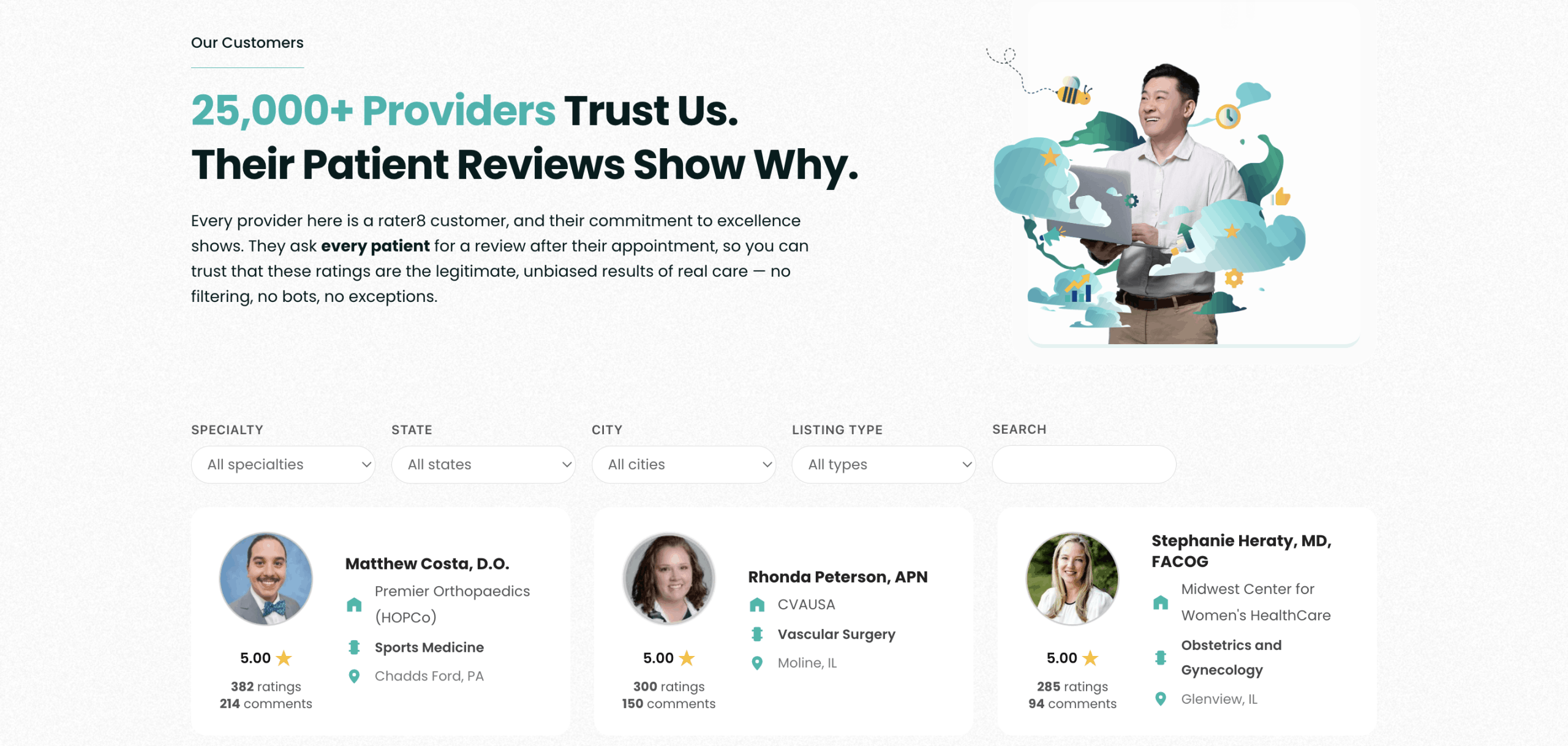
Navigating Trusted Healthcare Reviews and Online Medical Data Sources

Understanding the Different Categories of Patient Feedback and Ratings
When searching for trusted healthcare reviews, it helps to understand that not all patient feedback is created equal. Online medical data sources generally fall into three distinct categories, each offering a different lens through which to view a provider or facility.
General physician review platforms and consumer satisfaction sites
Public-facing consumer sites allow patients to share personal accounts regarding their office visits. While these platforms can give you a quick glimpse into a clinic’s atmosphere, they often suffer from a lack of clinical context. They are best used to gauge general office responsiveness rather than medical competence.
Hospital quality scorecards and facility-specific patient experience surveys
These structured evaluations, such as the Hospital Consumer Assessment of Healthcare Providers and Systems (HCAHPS) surveys, use standardized questions. They allow you to compare facilities side-by-side using statistically sound methodologies rather than emotional anecdotes.
Employer reviews, peer recommendations, and unverified patient testimonials
Testimonials found directly on a practice website or professional networking platforms often highlight curated success stories. While valuable for understanding a provider’s marketing focus, they should be cross-referenced with independent data sources to ensure a balanced perspective.
Consumer Satisfaction versus Objective Clinical Quality Metrics
A high volume of praise does not automatically equate to superior medical service quality. It is essential to separate how a patient feels about their experience from clinical benchmarks that track actual health outcomes.
Evaluating bedside manner, clinic accessibility, and appointment wait times
Consumer satisfaction scores heavily reflect interpersonal dynamics. High physician bedside manner ratings usually indicate that a doctor listens actively, explains diagnoses clearly, and treats patients with empathy. However, these metrics rarely capture whether the prescribed treatment adhered to evidence-based guidelines.
Analyzing patient safety indicators, infection rates, and clinical complication data
True medical excellence is measured through objective safety data. Reviewing rates of hospital-acquired infections, surgical complications, and unplanned readmissions provides a much clearer picture of whether a facility maintains rigorous clinical standards.
Recognizing the Hidden Pitfalls of Relying Solely on Star Ratings
Relying exclusively on a simple five-star rating system can easily lead you astray. Online reputation scores are frequently skewed by human psychology and statistical anomalies.
The impact of extreme emotional bias on overall score averages
Patients are overwhelmingly motivated to leave reviews when they feel exceptionally angry or profoundly grateful. This creates a polarization effect where moderate, routine experiences go unrecorded, leaving behind a distorted average shaped by emotional extremes.
Sample size limitations and the dangers of low-volume feedback
A physician with a five-star rating based on only two reviews is far less reliable than a doctor with a 4.2-star rating derived from two hundred reviews. Small sample sizes magnify individual outliers and fail to represent a provider’s consistent track record.
Identifying Verified Government and Institutional Quality Databases
To make truly informed decisions, savvy consumers bypass unverified forums in favor of institutional databases managed by public health authorities.
Leveraging Medicare Care Compare for hospitals, physicians, and facilities
Federal platforms like Medicare Care Compare pool millions of data points, offering objective performance ratings, patient survey summaries, and certification details for providers across the United States. You can explore insights like patient satisfaction ratings to better understand how standardized scoring works.
Utilizing state health department reports and public health registries
State-level medical registries track localized public health data, facility inspection findings, and mandatory reporting metrics. These regulatory documents offer unvarnished insights into facility compliance and historical safety records.
Evaluating Clinical Credentials and Medical Content Authenticity

Verifying Professional Board Certifications and Disciplinary Histories
Checking state medical board databases for active licenses and sanctions
When searching for trusted healthcare reviews, evaluating a practitioner’s digital reputation is only part of the equation. True safety begins with confirming that a doctor holds an active, unencumbered license to practice. Every U.S. state operates a medical board website where patients can look up a provider’s credentials free of charge. These official portals reveal whether a doctor has faced administrative actions, probation, or license suspensions. Checking these primary sources ensures that the medical service quality you expect is backed by legal and professional authorization.
Researching malpractice claims, legal settlements, and professional disciplinary actions
Beyond active licensing, it is prudent to investigate a physician’s history of malpractice claims and serious legal settlements. While a single isolated lawsuit does not automatically mean a physician provides poor care, a pattern of recurring malpractice allegations or formal hospital privilege revocations serves as a major red flag. State databases and specialty boards track these critical metrics, allowing prospective patients to separate marketing hype from verifiable clinical safety records.
Validating Facility Accreditations and Organizational Gold Standards
Understanding the role of The Joint Commission in hospital accreditation
Institutional quality relies heavily on independent oversight. The Joint Commission is an independent, non-profit organization that certifies thousands of health care organizations and programs in the United States. Earning their Gold Seal of Approval means a facility meets rigorous national performance standards focused on patient safety and quality of care. Checking whether a hospital or surgical center maintains this accreditation offers far more reliability than casual online star ratings.
Reviewing standards set by the National Committee for Quality Assurance and URAC
In addition to hospital evaluations, managed care plans and outpatient clinics often undergo rigorous reviews by organizations like the National Committee for Quality Assurance and URAC. These bodies evaluate everything from preventive care protocols to patient rights and disease management programs. Recognizing these organizational gold standards helps consumers identify facilities that genuinely prioritize clinical excellence.
Applying the CRAAP Test to Online Health Information and Medical Articles
Assessing the currency and relevance of medical research and treatment guidelines
When reading medical articles or health advice online, the CRAAP test—evaluating Currency, Relevance, Authority, Accuracy, and Purpose—serves as a reliable framework. Currency is especially vital in medicine, as clinical guidelines and pharmacological recommendations evolve rapidly based on new clinical trials. Always check publication or revision dates to ensure you are relying on modern therapeutic standards rather than outdated advice.
Verifying author credentials, medical reviewer panels, and editorial boards
Trustworthy health content should always display clear authorship and rigorous editorial oversight. Look for articles written by practicing clinicians, registered nurses, or certified specialists, and check if the content has been vetted by an independent medical review panel. Transparent publishing practices guarantee that the information you consume meets professional medical standards.
Detecting Medical Misinformation and Sponsored Content Online
Spotting hidden commercial sponsorships, affiliate biases, and unverified cures
The internet is flooded with sensationalized health claims, miracle supplements, and unverified cures driven by commercial incentives. Consumers must remain vigilant for hidden affiliate links, sponsored blog posts disguised as independent research, and biased testimonials designed to sell proprietary products. Recognizing these commercial undercurrents protects vulnerable patients from exploitation and financial waste.
Cross-referencing digital health claims with peer-reviewed medical journals
The ultimate safeguard against digital misinformation is cross-referencing claims with peer-reviewed literature found in databases like PubMed or Cochrane Library. If a sensational online treatment cannot be backed by randomized controlled trials or consensus statements from major medical associations, it should be approached with extreme caution. Prioritizing evidence-based verification ensures your health decisions are rooted in science rather than digital marketing.
Navigating the modern healthcare landscape requires a balanced approach that looks far beyond quick online star ratings. By understanding how to weigh subjective patient satisfaction ratings against objective clinical metrics, you can make informed decisions about your care. True medical evaluation involves looking at verified government scorecards, checking professional board certifications, and validating facility accreditations to ensure you receive the safest and most effective treatment possible.
Ultimately, becoming an empowered healthcare consumer means taking the time to cross-reference digital feedback with hard data. Whether you are researching a primary care physician, a specialized clinic, or a major hospital network, combining personal experiences with authoritative institutional benchmarks is the most reliable path forward. To dive deeper into evaluating your options, explore our comprehensive guide on trusted healthcare reviews: how to evaluate clinic quality to ensure your health is always in capable hands.